



What Size Mini Split Do I Need? — Room Sizing Guide in Fairview, NC
How to size a mini split by room dimensions, intended use, and local climate — find the right BTU capacity for your WNC space. Proudly serving Fairview & Buncombe County.
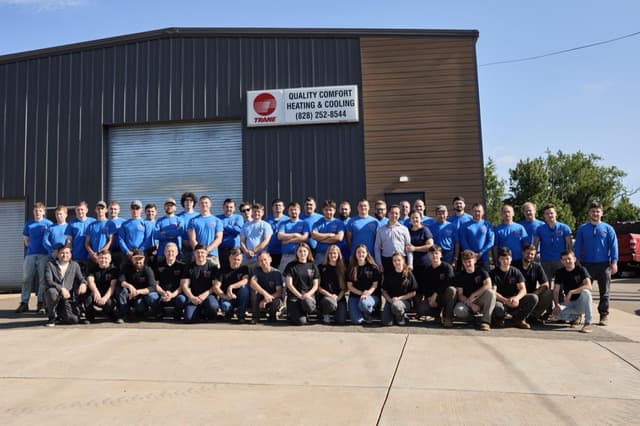
Professional What Size Mini Split Do I Need? — Room Sizing Guide in Fairview, NC
When you need what size mini split do i need? — room sizing guide in Fairview, NC, Quality Mechanical & Fireplaces is just 15 minutes east from our Asheville headquarters — meaning fast response times and reliable service. We've been the NATE-certified team that Fairview area residents trust since 2005.
Just east of Asheville along Charlotte Highway, Fairview's rural mountain community is well within Quality Mechanical's primary service area. We provide full HVAC services to Fairview residents, from emergency heating repair to new system installations, with the fast response times that come from being only 15 minutes away.
Ductless systems are a popular choice in Fairview — many homes in Fairview Crossroads, Cane Creek Valley, Garren Creek either lack ductwork or need supplemental zone control. Fairview's rural character means many homes sit on large, wooded lots with longer driveway access — requiring planning for HVAC equipment delivery and replacement. The Cane Creek valley's agricultural setting produces exceptionally high pollen counts in spring and fall that can clog standard air filters in under two weeks. Many Fairview homes use well water and septic systems, and HVAC condensate drainage must be planned carefully to avoid septic interference.
The Fundamentals of Mini Split Sizing
Mini split capacity is measured in BTU/h, and the correct size hinges on the room's square footage, ceiling height, insulation level, sun exposure, and typical occupancy. Because WNC homeowners frequently run mini splits year-round, heating load needs to be part of the equation too. Precise sizing matters more with ductless equipment than with central systems — each indoor head serves a single zone with no ductwork to redistribute air.
BTU Recommendations by Room Size in WNC
For rooms with adequate insulation and standard 8-ft ceilings: 150–300 sq ft → 9,000 BTU (0.75 ton); 300–500 sq ft → 12,000 BTU (1 ton); 500–700 sq ft → 18,000 BTU (1.5 ton); 700–1,000 sq ft → 24,000 BTU (2 ton); 1,000–1,400 sq ft → 36,000 BTU (3 ton). Bump up for weak insulation, tall or vaulted ceilings, extensive glazing, kitchens generating appliance heat, or spaces above 3,000 ft elevation. Scale down for shaded rooms, below-grade spaces, or areas with few windows.
Choosing Between Single-Zone and Multi-Zone
A single-zone system — one outdoor compressor paired with one indoor head — is tailor-made for adding climate control to an individual space: a sunroom, garage shop, bedroom addition, or equipment closet. Multi-zone configurations link a single outdoor unit to anywhere from two to five independent indoor heads, each with its own temperature setting. For whole-home comfort in a ductwork-free property, multi-zone mini splits provide true room-by-room control. The outdoor unit must be rated to support the combined capacity of all connected indoor heads.
Why Oversizing Backfires
With mini splits, more capacity is not a safety margin — it's a liability. An oversized head cools the space too fast, cycles off, and never runs long enough to strip humidity from the air. The result is a room that feels cold yet clammy, a particularly unpleasant combination in WNC's humid summers. A correctly sized unit operates in longer, lower-output cycles that dehumidify thoroughly and deliver even temperatures. Quality Mechanical sizes every mini split installation against actual room conditions rather than square footage alone.
HVAC Challenges in Fairview
Fairview's rural character means many homes sit on large, wooded lots with longer driveway access — requiring planning for HVAC equipment delivery and replacement. The Cane Creek valley's agricultural setting produces exceptionally high pollen counts in spring and fall that can clog standard air filters in under two weeks. Many Fairview homes use well water and septic systems, and HVAC condensate drainage must be planned carefully to avoid septic interference.
Seasonal Tip for Fairview Homeowners
Fairview's high pollen counts — among the worst in Buncombe County due to the mix of farmland and forest — demand more frequent filter changes. During peak pollen season (April–May and September–October), switch to MERV 11 or higher filters and change them every 2–3 weeks instead of monthly.

Serving Fairview & Buncombe County

Serving Fairview
- 15 minutes east from our Asheville office
- Same-day appointments available
- 24/7 emergency response
- NATE-certified technicians
- Free estimates on installations
- Financing available, subject to credit approval
Neighborhoods We Serve
Fairview Crossroads · Cane Creek Valley · Garren Creek · Charlotte Highway corridor · Reed Creek
Need help now?
(828) 761-3036

NATE-certified. Locally owned. Serving Western NC since 2005.
FAQ
Frequently Asked Questions About What Size Mini Split Do I Need? — Room Sizing Guide in Fairview
Related Services
Helpful Guides
Ductless Mini Split Guide
Mini split systems explained — how they work, installed pricing, advantages, limitations, and ideal uses in WNC.
Mini Split vs. Central Air
Ductless mini-split or central AC? We break down the pros, cons, and best-fit scenarios for WNC homes.
Mini Split vs Window Unit: Which Is Better?
Mini split vs window AC — an honest comparison of upfront cost, efficiency, noise levels, and total cost of ownership.
Need What Size Mini Split Do I Need? — Room Sizing Guide in Fairview?
Quality Mechanical is 15 minutes east away. Call today for fast, professional service.