


What Size Mini Split Do I Need? — Room Sizing Guide in Clyde, NC
How to size a mini split by room dimensions, intended use, and local climate — find the right BTU capacity for your WNC space. Proudly serving Clyde & Haywood County.
Professional What Size Mini Split Do I Need? — Room Sizing Guide in Clyde, NC
When you need what size mini split do i need? — room sizing guide in Clyde, NC, Quality Mechanical & Fireplaces is just 25 minutes west from our Asheville headquarters — meaning fast response times and reliable service. We've been the NATE-certified team that Clyde area residents trust since 2005.
Just minutes from Waynesville and Canton on I-40, Clyde is well within Quality Mechanical's primary Haywood County service area. We provide full heating, cooling, and indoor air quality services to Clyde homeowners. Our technicians know the valley's unique climate challenges and can recommend the right system for your home.
Ductless systems are a popular choice in Clyde — many homes in Downtown Clyde, Fines Creek, Crabtree either lack ductwork or need supplemental zone control. Clyde's position in the Pigeon River valley between Canton and Waynesville means it shares the cold air drainage and moisture issues of both communities. Many homes here are older ranch-style builds from the 1960s–80s with original ductwork that has deteriorated over decades. The area's proximity to the river also creates higher humidity levels that strain HVAC dehumidification capacity, especially in crawl space homes common throughout Haywood County.
The Fundamentals of Mini Split Sizing
Mini split capacity is measured in BTU/h, and the correct size hinges on the room's square footage, ceiling height, insulation level, sun exposure, and typical occupancy. Because WNC homeowners frequently run mini splits year-round, heating load needs to be part of the equation too. Precise sizing matters more with ductless equipment than with central systems — each indoor head serves a single zone with no ductwork to redistribute air.
BTU Recommendations by Room Size in WNC
For rooms with adequate insulation and standard 8-ft ceilings: 150–300 sq ft → 9,000 BTU (0.75 ton); 300–500 sq ft → 12,000 BTU (1 ton); 500–700 sq ft → 18,000 BTU (1.5 ton); 700–1,000 sq ft → 24,000 BTU (2 ton); 1,000–1,400 sq ft → 36,000 BTU (3 ton). Bump up for weak insulation, tall or vaulted ceilings, extensive glazing, kitchens generating appliance heat, or spaces above 3,000 ft elevation. Scale down for shaded rooms, below-grade spaces, or areas with few windows.
Choosing Between Single-Zone and Multi-Zone
A single-zone system — one outdoor compressor paired with one indoor head — is tailor-made for adding climate control to an individual space: a sunroom, garage shop, bedroom addition, or equipment closet. Multi-zone configurations link a single outdoor unit to anywhere from two to five independent indoor heads, each with its own temperature setting. For whole-home comfort in a ductwork-free property, multi-zone mini splits provide true room-by-room control. The outdoor unit must be rated to support the combined capacity of all connected indoor heads.
Why Oversizing Backfires
With mini splits, more capacity is not a safety margin — it's a liability. An oversized head cools the space too fast, cycles off, and never runs long enough to strip humidity from the air. The result is a room that feels cold yet clammy, a particularly unpleasant combination in WNC's humid summers. A correctly sized unit operates in longer, lower-output cycles that dehumidify thoroughly and deliver even temperatures. Quality Mechanical sizes every mini split installation against actual room conditions rather than square footage alone.
HVAC Challenges in Clyde
Clyde's position in the Pigeon River valley between Canton and Waynesville means it shares the cold air drainage and moisture issues of both communities. Many homes here are older ranch-style builds from the 1960s–80s with original ductwork that has deteriorated over decades. The area's proximity to the river also creates higher humidity levels that strain HVAC dehumidification capacity, especially in crawl space homes common throughout Haywood County.
Seasonal Tip for Clyde Homeowners
Clyde's valley floor location makes it susceptible to the same morning fog and frost patterns as Canton. Schedule your fall furnace maintenance by early October and check your outdoor heat pump unit's defrost cycle before the first freeze — river valley moisture causes earlier and heavier icing than hillside locations.

Serving Clyde & Haywood County
Serving Clyde
- 25 minutes west from our Asheville office
- Same-day appointments available
- 24/7 emergency response
- NATE-certified technicians
- Free estimates on installations
- Financing available, subject to credit approval
Neighborhoods We Serve
Downtown Clyde · Fines Creek · Crabtree · Lower Pigeon Valley · Clyde Elementary area
Need help now?
(828) 761-3036
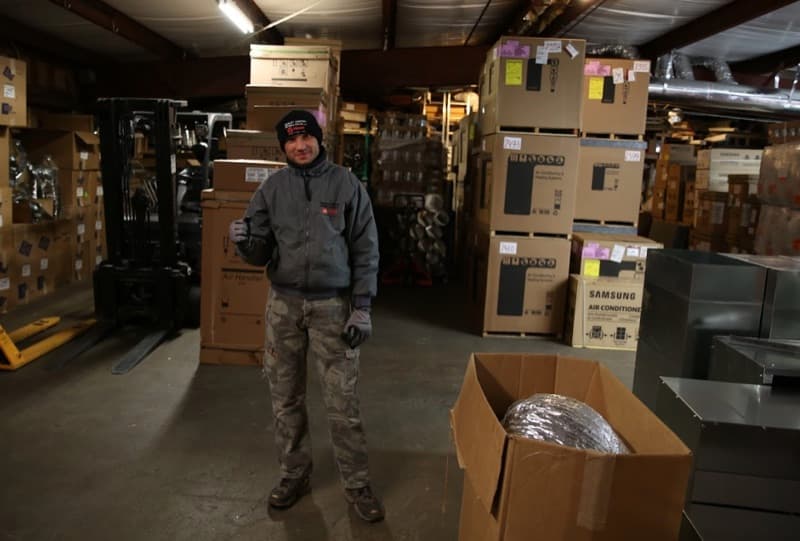
NATE-certified. Locally owned. Serving Western NC since 2005.
FAQ
Frequently Asked Questions About What Size Mini Split Do I Need? — Room Sizing Guide in Clyde
Related Services
Helpful Guides
Ductless Mini Split Guide
Mini split systems explained — how they work, installed pricing, advantages, limitations, and ideal uses in WNC.
Mini Split vs. Central Air
Ductless mini-split or central AC? We break down the pros, cons, and best-fit scenarios for WNC homes.
Mini Split vs Window Unit: Which Is Better?
Mini split vs window AC — an honest comparison of upfront cost, efficiency, noise levels, and total cost of ownership.
Need What Size Mini Split Do I Need? — Room Sizing Guide in Clyde?
Quality Mechanical is 25 minutes west away. Call today for fast, professional service.