


How to Tell If Your AC Needs Freon — Signs & Symptoms in Fairview, NC
Homeowners can't test refrigerant pressure directly, but these telltale symptoms reveal when your AC likely needs a professional recharge. Proudly serving Fairview & Buncombe County.
Professional How to Tell If Your AC Needs Freon — Signs & Symptoms in Fairview, NC
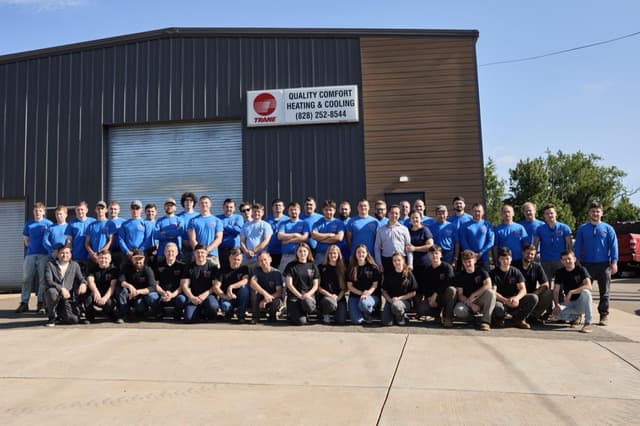
When you need how to tell if your ac needs freon — signs & symptoms in Fairview, NC, Quality Mechanical & Fireplaces is just 15 minutes east from our Asheville headquarters — meaning fast response times and reliable service. We've been the NATE-certified team that Fairview area residents trust since 2005.
Just east of Asheville along Charlotte Highway, Fairview's rural mountain community is well within Quality Mechanical's primary service area. We provide full HVAC services to Fairview residents, from emergency heating repair to new system installations, with the fast response times that come from being only 15 minutes away.
Fairview's rural character means many homes sit on large, wooded lots with longer driveway access — requiring planning for HVAC equipment delivery and replacement. The Cane Creek valley's agricultural setting produces exceptionally high pollen counts in spring and fall that can clog standard air filters in under two weeks. Many Fairview homes use well water and septic systems, and HVAC condensate drainage must be planned carefully to avoid septic interference.
Quick Clarification: "Freon" vs Modern Refrigerant
Most people say "Freon" when they mean refrigerant, but true Freon (R-22) was discontinued in 2020 because it damages the ozone layer. Today's AC systems run on R-410A (Puron), and the industry is shifting toward R-454B. The symptoms of low charge are identical regardless of refrigerant type, and federal law requires EPA 608 certification for anyone who handles, measures, or adds refrigerant to a cooling system.
How to Spot Low Refrigerant Without Gauges
You can't measure pressures at home, but your AC gives off clear warning signals when the charge drops: (1) Air from the vents feels lukewarm even though the system cycles normally — reduced refrigerant can't absorb sufficient heat. (2) Frost or ice coats the copper lines or the evaporator coil — a pressure drop from low charge pushes temperatures below freezing. (3) Electricity bills creep up because the compressor runs overtime compensating for lost capacity. (4) You hear hissing or gurgling near the indoor coil — a telltale sign of refrigerant escaping. (5) The thermostat set point is never reached no matter how long the system runs.
Topping Off Is a Temporary Band-Aid
Refrigerant circulates in a sealed loop; it doesn't deplete through normal use. A low charge always means a leak exists somewhere in the circuit. Dumping in more refrigerant without locating and sealing the leak guarantees the problem returns — often within a few weeks. The correct approach is professional leak detection, repair of the breach, full system evacuation, and a precise recharge matched to the manufacturer's specification.
Leak Detection and Repair Across WNC
Quality Mechanical tracks down leaks using electronic sniffers, UV-reactive dye tracing, and pressurized nitrogen testing. Evaporator coils, condenser coils, flare fittings, and line-set connections are the most frequent culprits. Costs hinge on the leak's location and how easy it is to reach. For older units still running R-22, a significant leak often makes AC replacement the smarter financial move — R-22 now runs $100–$200 per pound, and every recharge dollars go toward a system that will leak again.
HVAC Challenges in Fairview
Fairview's rural character means many homes sit on large, wooded lots with longer driveway access — requiring planning for HVAC equipment delivery and replacement. The Cane Creek valley's agricultural setting produces exceptionally high pollen counts in spring and fall that can clog standard air filters in under two weeks. Many Fairview homes use well water and septic systems, and HVAC condensate drainage must be planned carefully to avoid septic interference.
Seasonal Tip for Fairview Homeowners
Fairview's high pollen counts — among the worst in Buncombe County due to the mix of farmland and forest — demand more frequent filter changes. During peak pollen season (April–May and September–October), switch to MERV 11 or higher filters and change them every 2–3 weeks instead of monthly.

Serving Fairview & Buncombe County

Serving Fairview
- 15 minutes east from our Asheville office
- Same-day appointments available
- 24/7 emergency response
- NATE-certified technicians
- Free estimates on installations
- Financing available, subject to credit approval
Neighborhoods We Serve
Fairview Crossroads · Cane Creek Valley · Garren Creek · Charlotte Highway corridor · Reed Creek
Need help now?
(828) 761-3036

NATE-certified. Locally owned. Serving Western NC since 2005.
FAQ
Frequently Asked Questions About How to Tell If Your AC Needs Freon — Signs & Symptoms in Fairview
Need How to Tell If Your AC Needs Freon — Signs & Symptoms in Fairview?
Quality Mechanical is 15 minutes east away. Call today for fast, professional service.